Natural process
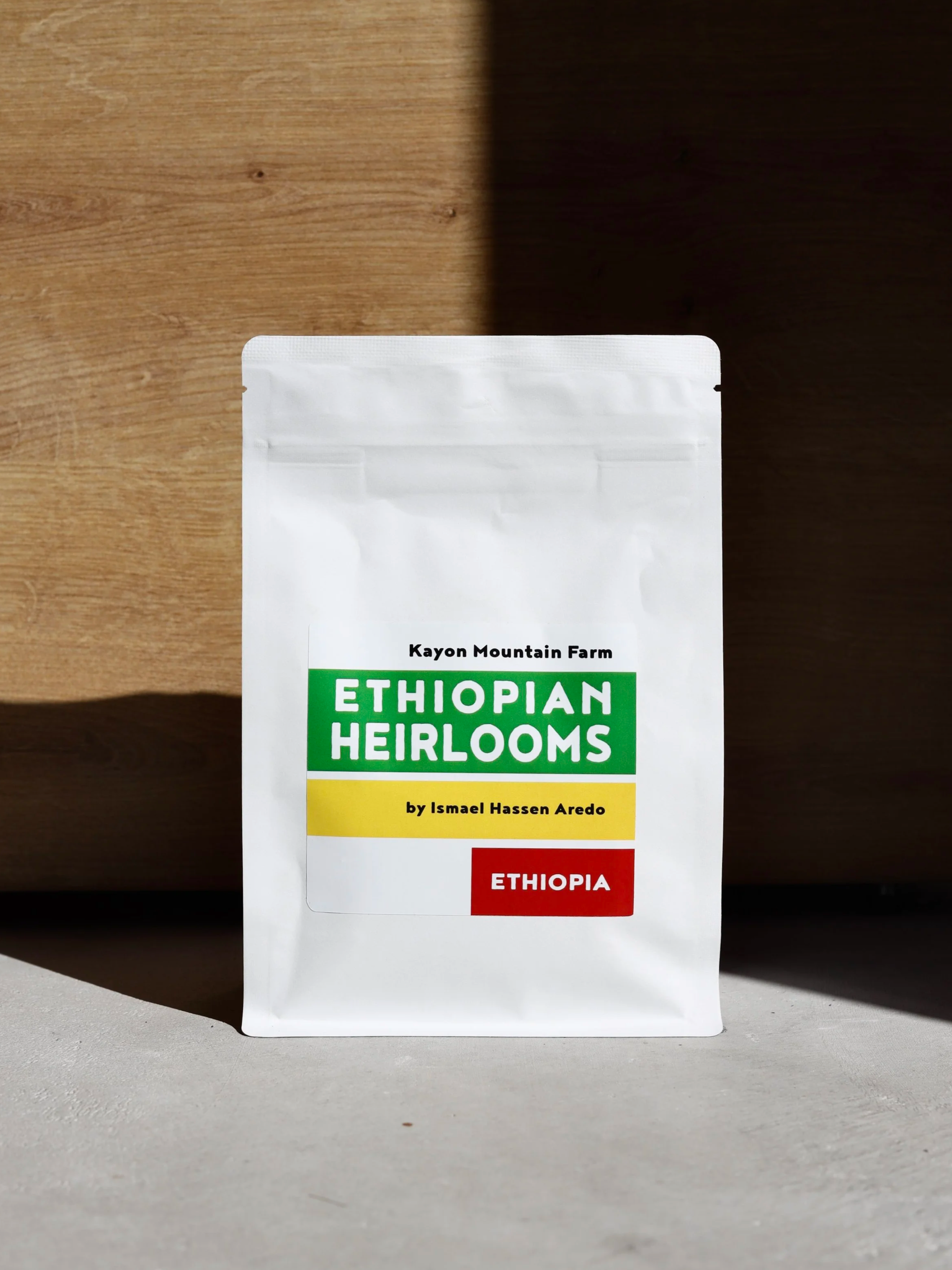
250 g whole bean coffee
This coffee is grown on Kayon Mountain Farm in the Guji zone of Ethiopia. The farm grows 300 ha of coffee and has an on-site plant nursery. Indigenous tree species (acacia and others) are used to shade the coffee plants and cuttings from these trees are used to create nutrient-rich composts. Ismael Aredo, the owner and operator, oversees 25 full-time and 300 seasonal employees.
Composed of native Ethiopian heirloom varieties, this is a dry or natural process coffee. When the ripe coffee cherries have been harvested, sorted and rinsed clean, they are spread out to dry in the sun for 8-25 days, depending on the weather. The dry cherries are then hulled to remove the outer layers of the fruit.
Tastes like: lemon + apricot + buttery + molasses
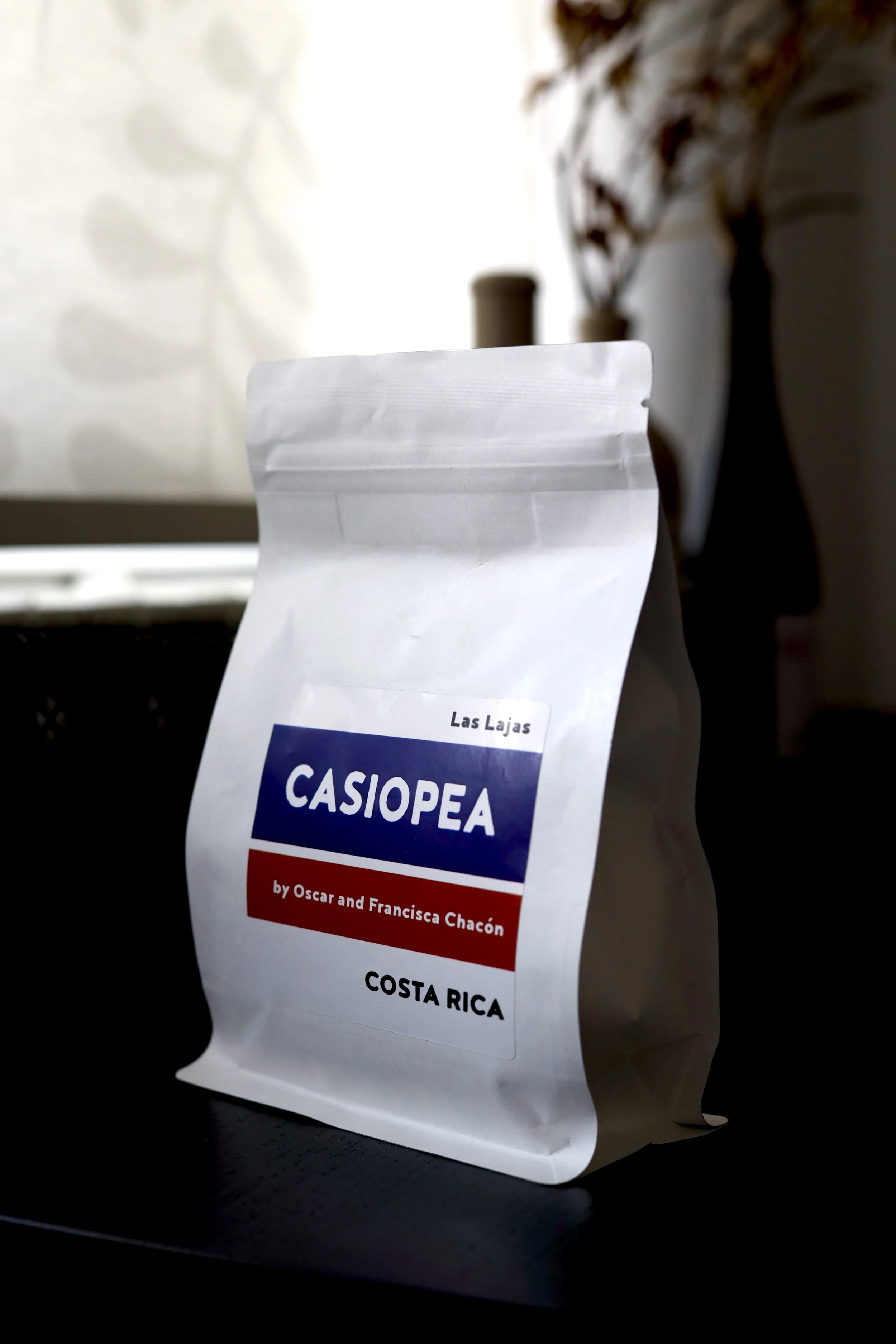
Yellow Honey process
250 g whole bean coffee
Oscar and Francisca Chacón, alongside their family, grow and process this Casiopea microlot coffee on Finca Sabanilla, on the slopes of the Poas volcano. Casiopea is a rare first generation (F1) hybrid variety, a cross between Caturra and an Ethiopian landrace. This coffee is a yellow honey process, which means that the cherries are picked ripe and brought to the family-run wet mill to be sorted and pulped, then are immediately spread out on raised beds to dry. The seeds are carefully raked several times per day to ensure low humidity until they are fully dry, which takes about one week.
Tastes like: peach, vanilla, creamy
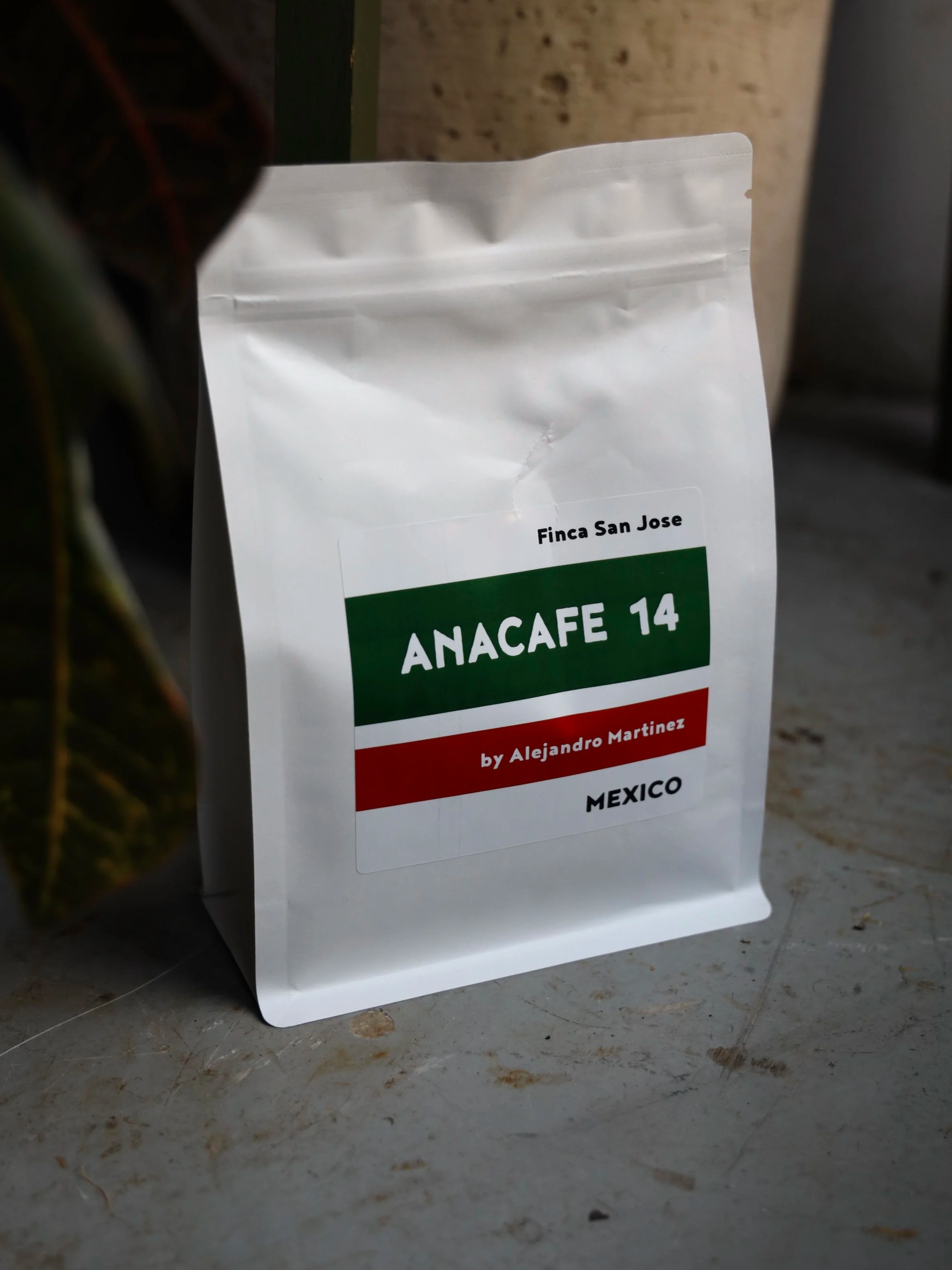
Washed process
250 g whole bean coffee
Alejandro Martinez owns and farms Finca San Jose, in the Mexican state of Veracruz close to the Gulf of Mexico, where he grows 60 ha of Anacafe 14 and various other coffee varieties. This microlot coffee was picked ripe and fermented for 18 hours before being depulped and spread out to dry in a casa elba (rooftop drying structure) for 32 days.
Tastes like: chamomile + mandarine + roasted nuts

Coffee Subscriptions